
From Stigma to Fine Art: How Tattoos Became Gallery Worthy

From ancient traditions to contemporary watercolour tattoos, discover how tattooing became recognised as an art form, and why the human body might be the most personal canvas of all.
There was a time when tattoos were associated with rebellion, outsiders and breaking social conventions. Today, tattoo artwork is exhibited in museums, studied by art historians and admired for its creativity, technical skill and cultural significance.
But here’s something I’ve always found fascinating: tattoos didn’t suddenly become art. They always were.
What changed was the way society looked at them.
As a tattoo artist with a background in fine art, I’ve always seen tattooing as an extension of painting and drawing. The techniques are different, of course, but the creative process shares so much: composition, colour theory, movement, emotion and storytelling.
And perhaps that’s what makes tattooing so special. Unlike a painting hanging in a gallery, a tattoo becomes part of someone’s life.

The History of Tattooing: An Art Form Thousands of Years Old
Long before tattoo studios existed, people were decorating their bodies with meaningful symbols, intricate patterns and artistic designs.
Tattooing has existed for thousands of years across different cultures, including ancient Egypt, Polynesia, Japan and many Indigenous communities.
Depending on the culture, tattoos could represent identity, spirituality, protection, ancestry, social status or personal achievements.
These weren’t simply decorative marks. Many required extraordinary precision, creativity and knowledge passed down through generations.
The idea that tattooing is a modern trend couldn’t be further from the truth.
In fact, tattooing is one of humanity’s oldest forms of artistic expression.
What I find particularly interesting is that, while paintings and sculptures were being celebrated in galleries, equally intricate artwork created on skin was often overlooked by Western art institutions.
The difference wasn’t necessarily artistic quality. It was the canvas.

From Rebellion to Recognition: Why Were Tattoos Stigmatised?
In Britain and other Western societies, tattoos became strongly associated with sailors, soldiers, working class communities and countercultures.
Although tattooing was practised across different social classes, these associations contributed to the idea that tattoos were rebellious or unprofessional.
For decades, visible tattoos could influence how someone was perceived in professional and social environments.
But attitudes gradually began to change.
As tattooing became more visible across different generations and communities, people started appreciating the individuality and craftsmanship behind the work.
Tattoo artists also developed increasingly diverse visual styles, drawing inspiration from illustration, painting, graphic design and contemporary art.
Traditional tattoos continued to evolve alongside realism, fine line, abstract, botanical and watercolour tattoo styles.
Rather than choosing a tattoo simply because it was fashionable, more people began searching for artwork that reflected their personality, memories and aesthetic preferences.
And with that came a different appreciation of tattooing.
Not simply as body decoration, but as personal art.

When Tattoo Art Entered Museums and Galleries
One of the clearest signs of tattooing’s growing recognition has been its presence in major museums.
In 2014, the Musée du quai Branly – Jacques Chirac in Paris presented Tattoo, an exhibition exploring the cultural and artistic history of tattooing around the world.
The exhibition subsequently travelled internationally, including to museums in Canada and the United States.
Closer to home, Tattoo: British Tattoo Art Revealed opened at the National Maritime Museum Cornwall in 2017, exploring centuries of British tattoo history and challenging common stereotypes.
These exhibitions presented tattooing through historical objects, original artwork, photographs and contemporary designs.
They also encouraged visitors to consider an interesting question:
If a painting can be considered fine art, why shouldn’t a carefully composed tattoo?
Of course, museum recognition isn’t what gives tattooing its artistic value. But it has helped introduce the craftsmanship and cultural significance of tattoos to audiences who might never have considered visiting a tattoo studio.

What Makes a Tattoo Fine Art?
This is where my background in fine art really influences the way I see tattooing.
I studied Fine Art at the Accademia di Brera in Milan before eventually finding my creative direction in tattooing.
Although the medium changed, many of the artistic principles I studied remain central to my work today.
Composition and Movement
A painting needs balance, and so does a tattoo.
But tattooing introduces another dimension: the human body.
Unlike a flat canvas, the body curves, stretches and moves. A successful tattoo design needs to complement those natural shapes rather than simply sit on top of them.
When I create a bespoke tattoo, I consider how the design flows around the anatomy, how the elements interact and where the eye naturally travels.
Sometimes, the spaces between the elements are just as important as the artwork itself.
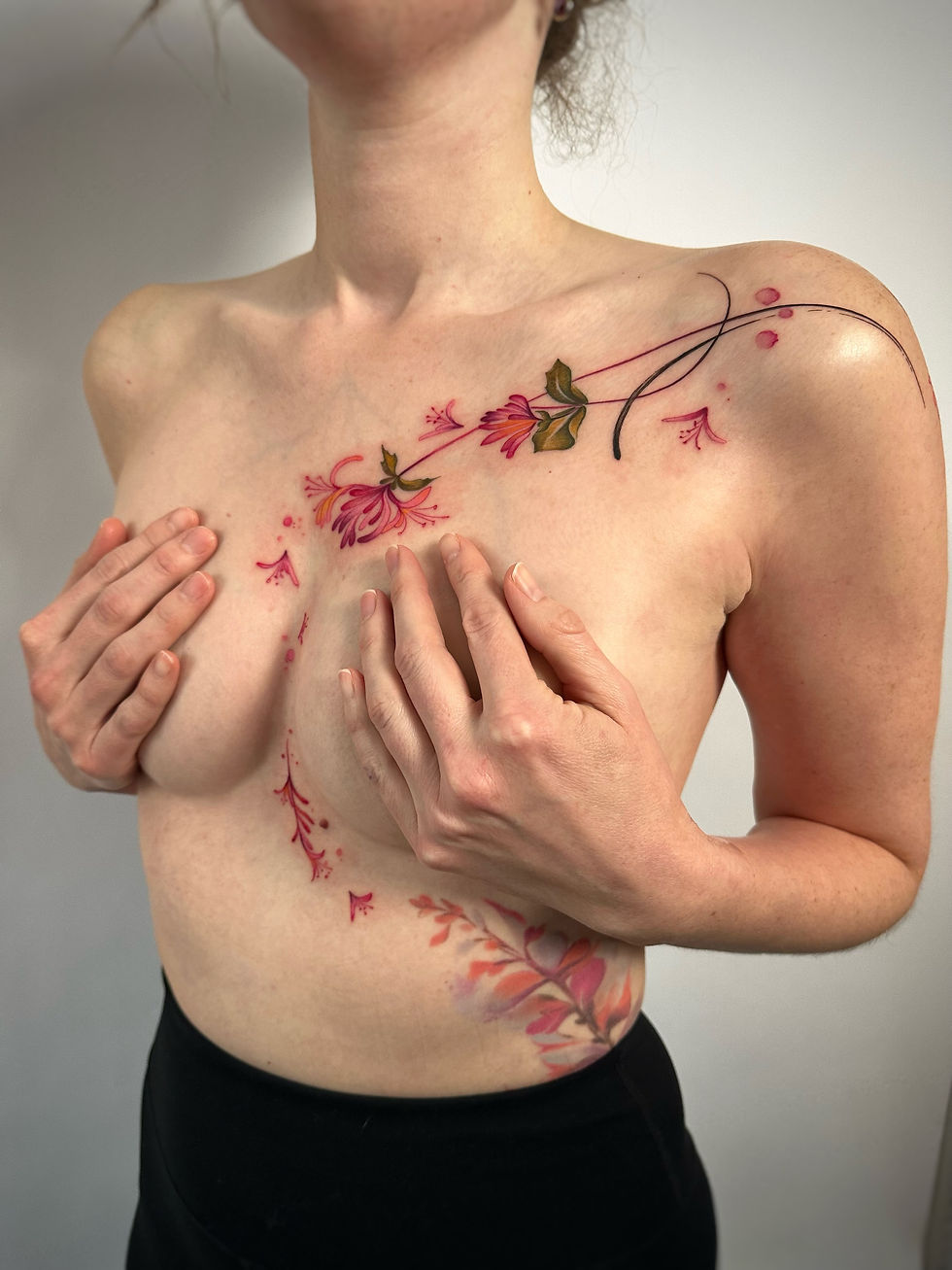
Colour Theory and Expression
Colour can completely transform the emotional quality of an artwork.
Soft blues might create a sense of calm, while warm oranges and reds can bring energy and movement.
In my watercolour tattoo designs, I use colour relationships, transparency and layered tones to create depth without relying entirely on heavy outlines.
These are principles I recognise from traditional painting, adapted to the very different technical requirements of tattooing.

Emotion and Storytelling
Art doesn’t always need to represent something literally.
A painting can evoke a feeling through colour, texture or movement, and tattoos can do exactly the same.
Some of my clients arrive with a very specific image in mind. Others bring a memory, an emotion or a personal story they want to express.
My role is to translate those ideas into something visually meaningful.
That’s one of my favourite parts of tattooing: creating artwork that connects with someone beyond its appearance.

Watercolour Tattoos: Where Painting Meets Skin
Traditional watercolour painting is known for its transparency, fluidity and delicate transitions between colours.
Watercolour tattoos aim to recreate that painterly appearance on skin.
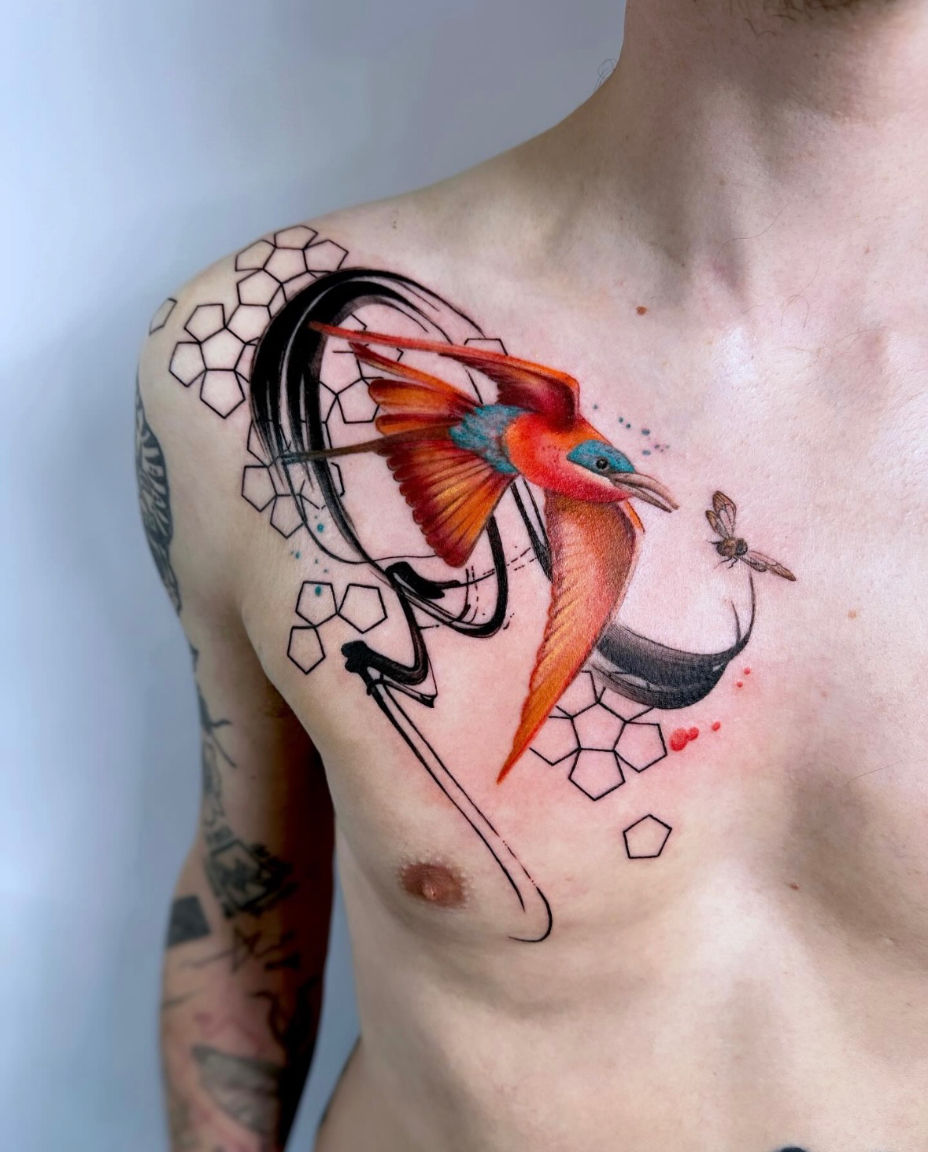
Rather than using only solid areas of colour and strong outlines, they can incorporate soft gradients, abstract brushstroke effects, delicate splashes and carefully balanced negative space.
The result can feel closer to an expressive painting than a conventional illustration.
However, creating that softness requires technical control.
Skin isn’t paper. Pigments behave differently, and tattoo designs need to account for healing, natural ageing and long term clarity.
That’s why I often combine expressive watercolour elements with fine line details and subtle contrast.
The fine lines provide structure, while the colour introduces movement and emotion.
For me, the beauty lies in finding the right balance between artistic freedom and technical precision.
If you’re curious about this approach, you can explore my watercolour tattoo techniques, history and aftercare guide.

The Human Body: A Living Canvas
One of the biggest differences between tattooing and traditional fine art is that a tattoo never exists independently of the person wearing it.
A painting can be moved from one wall to another. A tattoo becomes part of someone’s body, identity and everyday life.
It changes with movement, interacts with clothing and evolves naturally over time.
This makes tattooing a uniquely collaborative form of art.
The artist contributes creativity, experience and technical knowledge, while the client brings their personal story, ideas and connection to the design.
Neither part exists in quite the same way without the other.
I think this relationship is what makes custom tattoo design so interesting.
It’s not about reproducing an image perfectly. It’s about creating something that belongs to one person.
And unlike a painting in a gallery, it doesn’t need an audience to have meaning.

Why Bespoke Tattoos Are Becoming More Personal
One of the most interesting developments in contemporary tattooing is the growing interest in custom designed artwork.
People looking for artistic tattoos often want something beyond a familiar design or passing trend.
They might be inspired by nature, abstract painting, botanical illustration or a particular artistic movement.
Others want to capture a personal experience without representing it too literally.
This is where bespoke tattoo design offers so much creative freedom.
A flower doesn’t have to be a traditional botanical illustration. It can be interpreted through expressive lines, flowing colour and abstract shapes.
An animal tattoo can combine realistic details with painterly textures.
A meaningful memory can become a composition of colours and forms rather than a literal scene.
I particularly enjoy combining these different approaches, creating designs that feel organic, individual and connected to the person wearing them.
You can explore examples in my tattoo portfolio, including watercolour, floral, animal and abstract designs.

Choosing a Tattoo Artist With a Fine Art Approach
If you’re considering a fine art tattoo, watercolour tattoo or bespoke artistic design, choosing the right artist is an important part of the process.
Every tattoo artist has their own visual language.
Some specialise in realism and highly detailed portraits. Others focus on bold traditional work, geometric designs, minimalism or abstract compositions.
The key is finding someone whose existing artwork genuinely reflects the aesthetic you’re drawn to.
Look beyond individual photographs and consider the artist’s overall portfolio.
Do their designs demonstrate a consistent understanding of composition? Do their colours work harmoniously? Does the artwork complement the body?
For watercolour tattoos in particular, thoughtful placement, appropriate scale and sufficient contrast can make a significant difference.
I’ve explored this in more detail in my guide to the best placement for watercolour tattoo longevity.
Above all, choose an artist whose creative approach you trust and who takes the time to understand what you want your tattoo to express.
My Approach to Fine Art Tattooing in Wiltshire
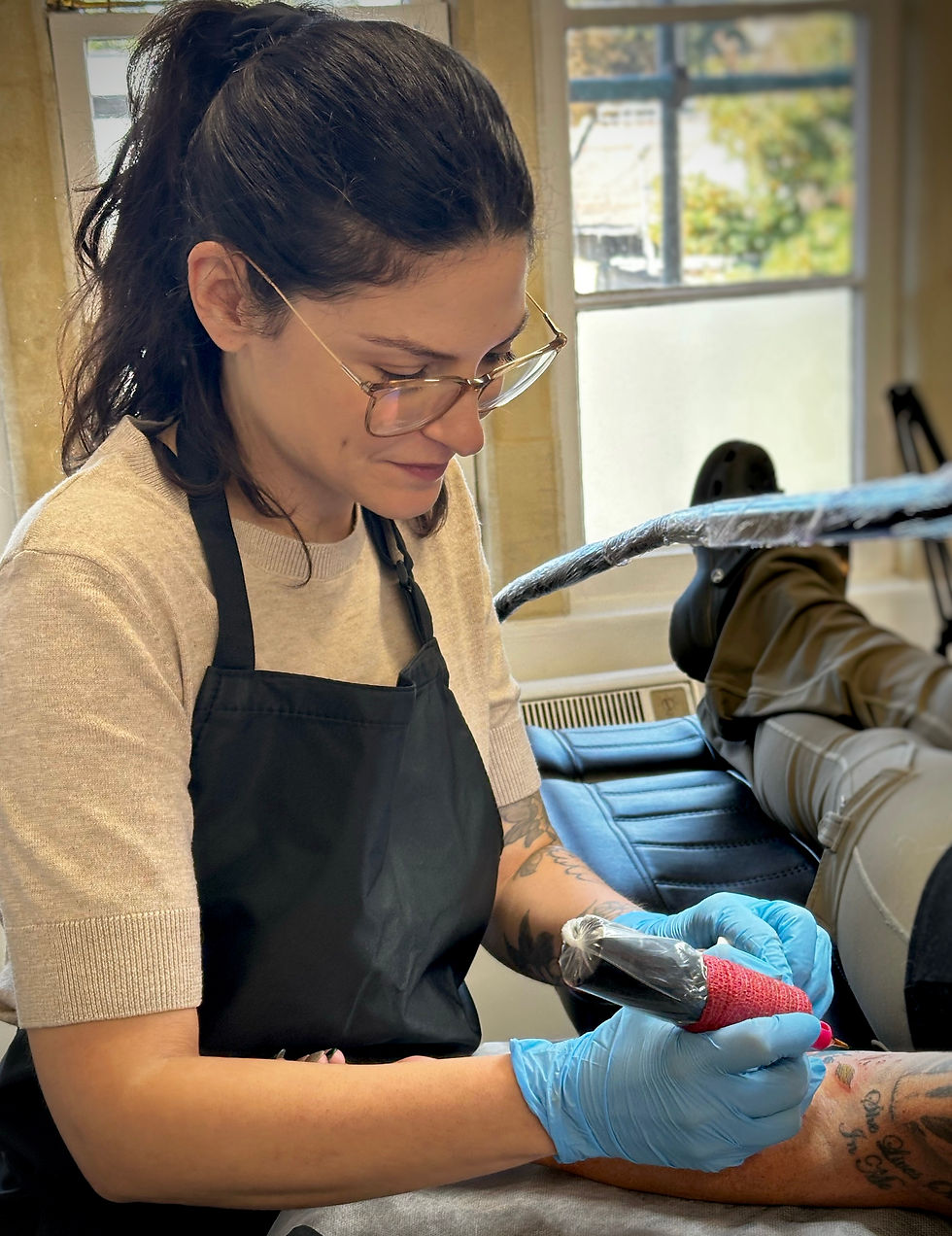
I’m LaVale, a watercolour and fine line tattoo artist based in Chippenham, Wiltshire, at Avant Art Tattoo Studio.
My journey began with fine art in Milan, but tattooing eventually became the medium through which I felt most connected to my creativity.
Today, my work combines elements of painting, abstract expression, fine line illustration and organic movement.
I’m particularly drawn to nature inspired designs, expressive colour and personal symbolism.
Rather than following a fixed formula, I approach each tattoo as an individual artwork.
I want the composition to feel natural on the body, the colours to work harmoniously and the finished design to reflect something meaningful about the person wearing it.
For me, a tattoo should feel considered rather than rushed.
Something created with intention, not simply chosen from a trend.
If you’d like to understand more about my creative background, you can read my story and journey from fine art to tattooing.
Are Tattoos Really Fine Art?
I think the most interesting thing about this question is that it encourages us to reconsider what art actually means.
Does artwork need to hang on a wall to be valuable?
Does it need to be displayed in a museum?
Or can art exist in something more personal, temporary and constantly evolving?
Tattooing involves many of the same creative decisions as painting, drawing and sculpture, but it also introduces its own technical challenges and cultural traditions.
Not every tattoo is intended to be fine art, just as not every painting is created for a gallery.
And that’s perfectly fine.
What matters is recognising tattooing as a diverse artistic medium, capable of expressing everything from cultural identity to personal memories and contemporary visual experimentation.
For me, the body isn’t simply a surface to decorate.
It’s a living canvas, and every person brings a different story to it.
Art That Lives With You
Art has always been a way for people to express who they are, what they value and how they experience the world.
Tattooing is no different.
Its growing recognition in museums and galleries is fascinating, but I don’t think a tattoo needs to be exhibited to deserve artistic appreciation.
Sometimes the most meaningful artwork is the piece nobody else fully understands.
A little colour, a delicate line, a memory transformed into something visual.
Something that moves with you, changes with you and becomes part of your story.
And perhaps that’s what makes tattooing such a beautiful art form.
Thinking About Creating Your Own Piece of Wearable Art?
If you’re looking for a watercolour tattoo artist in Wiltshire or would love a bespoke tattoo inspired by painting, nature or abstract art, I’d love to hear your ideas.
I create personalised watercolour and fine line tattoos at Avant Art Tattoo Studio in Chippenham, welcoming clients across the South West and behond.
Explore my tattoo style and artistic approach, browse my portfolio or get in touch to begin your custom tattoo journey.
Lavale — Watercolour & Fine Line Tattoo Artist, Chippenham, Wiltshire.


