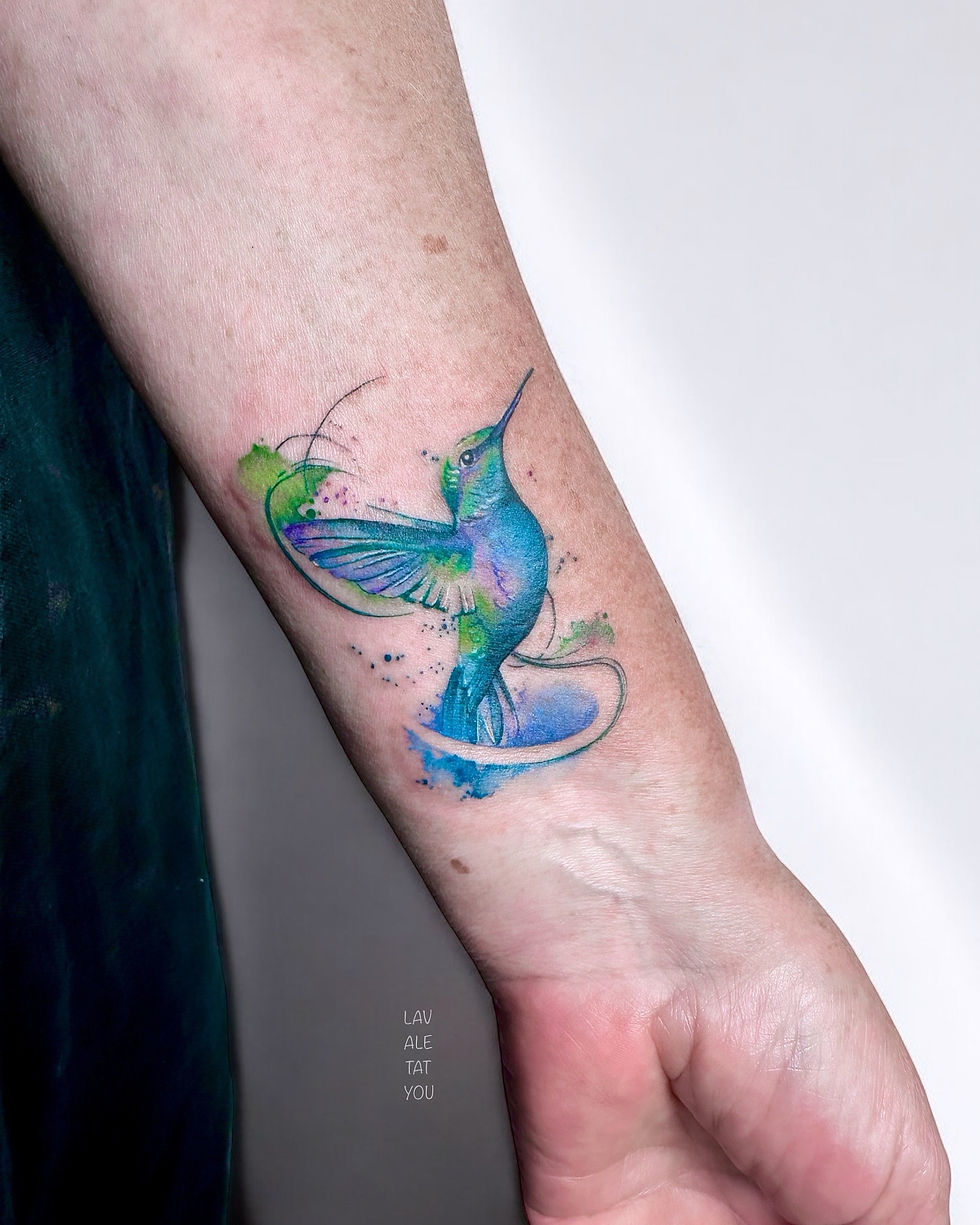
Where Should You Place a Watercolour Tattoo for Best Longevity?

One of the most common questions I get asked during consultations isn’t about design, colour choices, or even pain. It’s whether a watercolour tattoo will last.
I completely understand why people ask. Watercolour tattoos have developed a bit of a reputation online over the years. You’ll find articles claiming they fade quickly, don’t age well, or disappear after a few years. In reality, most of those discussions miss a very important detail: placement matters just as much as the tattoo itself.

After years of creating watercolour tattoos, I’ve noticed that some areas of the body simply hold colour better than others. The difference can be surprisingly dramatic.
When I’m designing a tattoo, I’m not just thinking about how it will look on the day it’s finished. I’m thinking about how it will look five, ten, or even twenty years from now. That’s one of the reasons I sometimes recommend a different placement than the one a client originally had in mind.
The biggest enemy of any tattoo is the sun. It doesn’t matter whether your tattoo is traditional, realism, fine line, or watercolour. Ultraviolet light gradually breaks down pigment over time. The reason people often think watercolour tattoos fade faster is because they tend to contain lighter shades, softer transitions, and more delicate colour work. When those colours lose intensity, it can become noticeable sooner than it would in a tattoo built entirely from heavy black ink.
This is why I love placing watercolour tattoos on areas like the inner forearm, hip/thigh, or ribs. These areas spend much of their lives protected by clothing, which means the colours stay brighter for longer. The skin is also relatively stable in these locations, giving the artwork a beautiful canvas that changes very little over time.

The top arm/shoulder is a popular choice, and for good reason. It’s visible, elegant, and works particularly well for botanical designs, birds, florals, and flowing compositions. The only thing I always tell clients is that if you choose a top arm/shoulder tattoo, sunscreen becomes your best friend. A few seconds of protection on sunny days can make a huge difference to how vibrant the colours remain years later.

On the other hand, there are some placements where I tend to have a more honest conversation with clients. Hands, fingers, feet, and the sides of the feet are beautiful locations, but they live hard lives. They experience constant friction, regular washing, exposure to the elements, and continual skin renewal. It doesn’t mean you can’t have a tattoo there, but it does mean you should go into the decision understanding that it will require touch-ups sooner than a tattoo placed elsewhere.
Something else that rarely gets discussed is scale. Many people fall in love with the softness of watercolour tattoos and then want them reduced to the smallest possible size. While I understand the appeal, watercolour work often benefits from having room to breathe. The subtle transitions between colours, the splashes of pigment, and the painterly effects that make the style unique all need space to exist. A larger tattoo doesn’t just create more impact visually; it often ages more gracefully because those details have room to settle naturally over time.

What’s interesting is that the best placement isn’t always the place that offers the absolute longest longevity. It’s about finding a balance between visibility, personal meaning, and practicality. I have clients who choose a forearm because they want to see their tattoo every day. Others choose a shoulder blade because they love the idea of carrying a private piece of artwork that only appears occasionally. Neither choice is wrong.
My role as an artist is to help people understand the long term picture so they can make an informed decision.
When a client comes to me for a watercolour tattoo, I’m not looking for the quickest route to getting ink on skin. I’m looking for the placement that allows the design to work with the body, not against it. A beautiful tattoo isn’t just about the initial result. It’s about creating something that continues to feel beautiful many years later.

If you’re considering a watercolour tattoo and aren’t sure where it should go, it’s worth spending time discussing placement before finalising the design. Sometimes moving a tattoo just a few inches can make a significant difference to how it ages.
The goal isn’t simply to create a beautiful tattoo for today. It’s to create a piece of artwork that you’ll still love years from now.
Lavale